Samsung: “AI Will Cut Semiconductor New Material Development Time from 5 Years to 2 Years”
Master Choi Young-sang Presents at the KIAF AI Governance Symposium
Plan to Increase Discovery of Promising Materials Fivefold and Reduce Number of Experiments by 80%
From Hypothesis Generation to Verification… Linking with Autonomous Laboratories
“As AI’s Authority Grows, Independent Oversight Is Needed”
[Edaily Reporter Shin Yeong-bin ] SamsungElectronics(005930)has set a goal of using artificial intelligence (AI) to reduce the development time for new semiconductor materials from the current five years to two years.
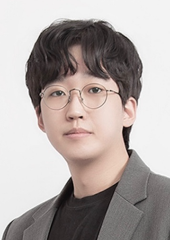
Choi Young-sang, a Master at SamsungElectronics, presented this direction for semiconductor materials R&D on the 26th at the “AI Safety and Governance Symposium” hosted by the Korea Industry Association Forum (KIAF) at the Automobile Hall in Seocho-dong, Seoul. Choi Young-sang, a Master at SamsungElectronics, is presenting an AI-based semiconductor materials development strategy at the “AI Safety and Governance Symposium” hosted by the Korea Industry Association Forum at the Automobile Hall in Seocho-gu, Seoul, on the 26th. (Photo: Korea Industry Association Forum) Semiconductor material development involves identifying substances that meet performance and process requirements from a vast array of candidate combinations.
Master Choi explained, “Semiconductor materials consist of multiple thin film layers; based on seven layers, there are over 100 million possible material combinations, but actual experiments are limited to a maximum of about 50 per month.”
It has been pointed out that a trial-and-error approach relying on researchers’ experience and intuition can take months to years and fails to fully utilize data from failed experiments. SamsungElectronics plans to apply AI to this exploration process to improve development efficiency.
Master Choi stated, “Our goal is to use AI to shorten the development period for new semiconductor materials from the current five years to two years, increase the number of promising material candidates identified by more than fivefold, and reduce the number of experiments required to identify optimal conditions by more than 80 percent.” He explained that this will reduce development costs and enable the technology to be expanded to other industrial sectors, such as battery materials, in the future.
The foundation for this is “Science AI.” It is a system that integrates data from academic papers, patents, and in-house experiments to structure knowledge; based on this, AI generates promising hypotheses, designs experiments, and verifies them through simulation. This approach utilizes data accumulated during the research process for subsequent exploration and verification.
The company also presented a plan for connecting to actual equipment. The vision is to operate the entire research process in a cyclical manner by linking with an “autonomous laboratory”—where AI agents transmit experimental plans to the equipment, which then automatically performs processes, measurements, and analyses.
However, challenges remain. The AI’s ability to generate and validate hypotheses depends on the performance of the underlying large language model (LLM), and data from failed experiments and researchers’ experience have not been sufficiently digitized.
Choi Master explained that the computational complexity of simulations and the accuracy limitations of Retrieval-Augmented Generation (RAG) must be improved. He emphasized that core research data must be processed in an on-premises environment built internally to prevent external leakage. Kathy Baxter, Vice President of Salesforce, is presenting on the safety of autonomous AI and strategies for establishing governance at the Korea Industrial Federation Forum’s “AI Safety and Governance Symposium,” held on the 26th at the Automobile Association Building in Seocho-gu, Seoul. (Photo: Korea Industrial Federation Forum) The shift toward AI designing experiments and controlling equipment brings new safety challenges. In her keynote speech that day, Salesforce Vice President Kathy Baxter noted that as AI evolves from chatbots to autonomous AI capable of independently planning and operating systems, the ripple effects of errors are growing.
“What used to be merely an incorrect answer can now lead to tangible harm, such as data corruption or system malfunctions,” said Vice President Baxter. She explained that it is necessary to track the data retrieved by AI, calls to external tools, and memory modification histories. She also pointed out the need to prevent situations where human supervisors, weary of repeated warnings, grant approvals merely as a formality.
He proposed a framework for classifying AI’s functions, autonomy, and permissions, and for evaluating its performance and potential harm in real-world environments. In particular, he emphasized the need to manage permissions at each stage—including design and evaluation, deployment preparation, and operation and improvement—and stressed that “a system requiring re-approval each time the AI’s autonomy expands is necessary.”
Lim Jong-in, Professor Emeritus at the Graduate School of Information Security at Korea University, stated that a mechanism is needed to independently monitor and control AI from the outside. Specifically, he proposed “cognitive zero trust,” “independent kill switches,” and “cyber resilience” as the three major safety mechanisms.
This approach involves verifying the intent behind AI behavior from an external perspective and granting only the minimum privileges necessary for the task at hand for a limited period. In the event of a malfunction, network and Application Programming Interface (API) access must be immediately blocked, and core operations must be swiftly restored.
Professor Lim also proposed pre-release reviews of safety mechanisms, reporting of major incidents, and the establishment of criteria for allocating responsibility between developers and adopting companies. “As the autonomy of AI agents becomes more advanced, it is essential to establish a control system that allows for independent external monitoring and control,” Professor Lim said.
“Via Inkino,” a furniture and lifestyle startup backed by Musinsa Partners, has filed for simplified reorganization with the court. This comes about a year after the company began expanding its busine…
#Harim Industries, a wholly-owned subsidiary of Harim Holdings Co., Ltd., is moving forward with a spin-off to separate its real estate development and food business divisions. This move is seen as a …
SLSBio(Specialty Lab Solution Bio) Co., Ltd(246250)has filed a motion with the court for a provisional injunction to suspend the Korea Exchange’s delisting decision. As a result, the delisting procedu…