[Edaily Reporter Kim Seung-kwon ] "Sleep accounts for one-third of our lives. Sleep diagnostics, which were previously only available in hospitals, are now coming into our bedrooms."
As noted by Yoon In-young, a professor in the Department of Psychiatry at Seoul National University Bundang Hospital and a leading authority on sleep medicine in Korea, the “sleep-tech” industry is experiencing explosive growth as the global population suffering from sleep disorders surges. In particular, sleep apnea—a condition in which the airway repeatedly blocks during sleep, causing oxygen deprivation in the brain and heart—has emerged as a key cause of hypertension, cardiovascular disease, stroke, and cognitive decline, making it a top priority for both the medical and industrial sectors.
However, critics point out that polysomnography (PSG)—the standard test for diagnosis—requires patients to spend a night in a hospital with dozens of sensors attached, involves costs of hundreds of thousands of won, and entails long wait times, meaning many potential patients still go undiagnosed.
As the paradigm shifts toward “AI-based Home Sleep Tests (HST)” that directly address these limitations, the market is being reshaped by different players: in the U.S., CPAP giants and big tech firms like Samsung Electronics and Apple; and in South Korea, dark horses such as A-Sleep and WisMedical, each wielding their own unique strengths. Pharm iDaily analyzed the current state of the evolving sleep tech market and its technological landscape.
Smartphone Microphones vs. Wrist Sensors… A-Sleep Carves Out a Niche Amid Big Tech
The global standard treatment for this condition remains continuous positive airway pressure (CPAP) devices. According to market research firms, the total market for sleep apnea devices, including CPAP machines, is projected to more than double from $10.3 billion (approximately 15.2 trillion won) in 2025 to $22.87 billion (33.9 trillion won) by 2034.
This massive market is dominated by the “CPAP Big Three”—ResMed, Philips, and Fisher & Paykel Healthcare. ResMed’s revenue last year exceeded 3.9 trillion won.
Amid these industry giants, some companies are quietly competing on technology. A-Sleep and Wiske Medical, leading South Korean sleep tech companies, are at the forefront. A-Sleep relies solely on a smartphone microphone, without any hardware. Using a deep learning algorithm trained on approximately 10,000 hospital polysomnography (PSG) data sets, it analyzes breathing sounds during sleep to track sleep stages and apnea events.
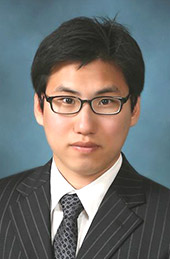
Professor Yoon In-young of the Department of Psychiatry at Seoul National University Bundang Hospital answering questions in an interview with Pharm E-Daily (Photo: ReporterKim Seung-kwon )
Professor Yoon In-young, who led the clinical validation of A-Sleep’s digital diagnostic aid “AppNoTrack,” explained, “Polysomnography is a kind of bible in the field.” She added, “When new technology emerges, it must be compared to see how well it aligns with the results of this standard test. Despite being a non-contact method, AppNoTrack demonstrated remarkably high sensitivity (87%) and specificity (92%) in identifying actual patients.”
Professor Yoon went on to emphasize, “Compared to existing smartwatches (wearables) or mattress sensors (nearables), AppNotrack—which uses the ‘Airable’ method requiring no wearable devices—is overwhelmingly superior in terms of convenience and also delivers the highest level of performance.”
The business model is strictly B2B. Since receiving South Korea’s first-ever approval in May 2024 for a Class 2 medical device—a smartphone app-based sleep apnea diagnostic aid—the company has been supplying data via API to pharmaceutical companies and insurers. Recently, it entered into a co-marketing partnership with Chong Kun Dang, accelerating its entry into tertiary general hospitals and primary care clinics, and more than doubling related revenue in a short period.
In contrast, Samsung Electronics received U.S. FDA “De Novo” approval for the “sleep apnea feature” on the Galaxy Watch, while Apple received Software as a Medical Device (SaMD) approval for the Apple Watch’s accelerometer-based breathing disturbance detection feature. The goal of these big tech companies is mass screening. However, there is a limitation: even if they can identify high-risk groups based on patterns such as decreased blood oxygen saturation (SpO2), they cannot provide the electroencephalogram (EEG) data essential for developing treatment plans. ResMed, the undisputed leader in the CPAP market, is also adopting an accessibility-focused strategy similar to that of smartwatches.
A-Sleep is targeting precisely this “blind spot.” While Big Tech and the CPAP leader are expanding their market share through “data volume and accessibility,” A-Sleep is competing on the “quality of PSG-based deep learning” through its hospital network, delivering medical-device-grade precision.
Its utility is also being proven in actual clinical practice. Professor Yoon stated, “With hospital waiting lists exceeding two months, we first conduct tests using AppNoTrack; if severe apnea is detected, we immediately refer patients for detailed examinations and CPAP therapy, thereby improving treatment efficiency.” He also emphasized the importance of understanding proper usage, adding, “I tried it myself, and at first I was surprised to see an apnea index of 20, but it turned out to be because I had placed my smartphone too far away.”
Three Patches (Forehead, Chest, Arm) vs. Implantable Devices… WisMedical Heads to the U.S. with Hospital-Grade HST
WisMedical, a Korean company spun off from the Georgia Institute of Technology, is targeting a market niche through form factor innovation. The company has developed “Tedream,” an ultra-thin wireless patch that is applied to three locations: the forehead, chest, and arm. It simultaneously collects 10 polysomnography-grade biosignals—including electroencephalogram (EEG), electrocardiogram (ECG), electromyogram (EMG), oxygen saturation (SpO2), respiratory rate, and body temperature—providing far richer clinical data than existing HST systems that use cannulas or chest straps. Having completed domestic clinical trials, the company is now preparing for U.S. FDA approval, using Georgia Tech as a springboard.
Another countermeasure from the U.S. is the “implantable hypoglossal nerve stimulator.” Led by Inspire Medical Systems, this device is implanted in the chest to stimulate the hypoglossal nerve during sleep, thereby preventing airway collapse in severe patients who cannot tolerate CPAP. Although its indications have expanded since its FDA approval in 2014, high costs and the burden of surgery are cited as barriers to adoption.
TedAid, a soft wearable diagnostic device unveiled by WisMedical at CES 2024 (Photo: WisMedical)
The overall market for obstructive sleep apnea (OSA) treatment devices is projected to grow rapidly from $9.42 billion in 2024 to $14.55 billion in 2032. Within this massive market, a WisMedical official is setting its sights squarely on the global at-home diagnostics market, based on the premise that “while not every patient can opt for an implant, every patient can apply a patch.”
Ultimately, while the “Big Three” in CPAP and implantable devices firmly hold the main pillars of treatment, South Korea’s dark horses are filling the gaps in diagnosis and screening with innovative tools such as smartphones and patches.
Professor Yoon In-young stated that these digital devices will completely transform the landscape of sleep medicine, identifying the widespread adoption of “home monitoring” as a key trend for the future. “In the U.S., simplified at-home sleep tests are already covered by insurance,” she noted. “If highly accurate apps like AppNoTrack become widespread, the barrier to accessing medical care will lower, paving the way to identify over 1 million undiagnosed sleep apnea patients.”
He also emphasized the connection to obesity treatment. Professor Yoon explained, “Weight loss is the first step in treating sleep apnea, and if patients can use an app to check daily how much their sleep has improved after losing weight, it will greatly help motivate them to continue treatment.” Furthermore, he expressed hope that the introduction of ChronoTrack technology—which analyzes sleep stages and quality—will become a highly useful tool for counseling patients with insomnia.
A Swiss startup that leases artificial intelligence (AI) servers to businesses has raised approximately 25 billion won. This is an unusual amount of funding for an early-stage company, which typically…
SamyangFoods has partnered with the Ministry of Culture, Sports and Tourism to attract international tourists and promote tourism in Korea, spearheaded by its flagship brand, “Buldak Bokkeummyun.” The…
"Sleep accounts for one-third of our lives. Sleep diagnostics, which were previously only available in hospitals, are now coming into our bedrooms."As noted by Yoon In-young, a professor in the Depart…