[Edaily Reporter Kim Seung-kwon ] The focus of cancer treatment is shifting from hospital injection rooms to patients’ daily lives. This shift is driven by global pharmaceutical companies converting intravenous (IV) biologics—which used to take several hours to administer—into subcutaneous (SC) formulations that take about 5 to 10 minutes. However, even though the administration time has shortened, managing side effects—such as vomiting, pain, infections, and immune-related adverse reactions that can last from several days to about two weeks after treatment—remains the responsibility of patients and their caregivers.
In response, Herring has partnered with the Korean Gynecologic Oncology Group (KGOG) to jointly develop “Tango,” a software solution for real-time monitoring of side effects and symptoms associated with anticancer treatment for gynecologic cancer patients. The vision goes beyond a simple app for recording patient symptoms; it aims to fill the management gaps that may arise as anticancer treatment extends beyond the hospital setting.
Herrings will lead the development and commercialization of Tango, while KGOG will provide clinical advice tailored to gynecologic cancer care and conduct clinical trials for commercialization purposes. Upon completion of development, the companies plan to promote its adoption in actual clinical settings through KGOG’s network of member healthcare professionals and affiliated medical institutions. PharmDaily analyzed Herrings’ future strategy for its anticancer treatment platform and its long-term market potential.
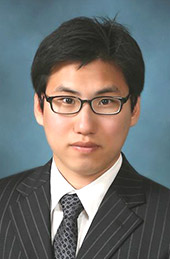
Nam Byung-ho, CEO of Herings, being interviewed by PharmDaily (Photo: ReporterKim Seung-kwon )
Administration in a Matter of Minutes… Competition in “Out-of-Hospital” Cancer Treatment Heats Up
The shift toward subcutaneous (SC) administration of biopharmaceuticals is a clear trend in the global pharmaceutical industry. Last September, the U.S. Food and Drug Administration (FDA) approved MSD’s subcutaneous version of the immunotherapy drug “Keytruda.” Prior to that, in 2024, Roche and Genentech’s “Tecentriq” SC formulation and BMS’s “Opdivo” SC product were also approved in succession.
The most significant change brought by subcutaneous formulations is the convenience of administration. Since the administration time for intravenous injections—which typically took 30 minutes or more—has been reduced to just a few minutes, patients’ hospital stays can also be significantly shortened. This is why analysts are noting that the criteria for competition in anticancer drugs are expanding beyond drug efficacy and survival rates to include the location of administration, administration time, and the overall treatment experience.
In Europe, the model of administration outside of hospitals is also becoming a reality. The Committee for Medicinal Products for Human Use (CHMP) under the European Medicines Agency (EMA) has issued a positive opinion on a plan for healthcare professionals to administer Roche’s HER2-positive breast cancer treatment “Pesgo” at patients’ homes. This approach involves healthcare professionals visiting patients’ homes to administer the medication to those whose safety has been confirmed at a medical facility.
A Roche survey found that 91% of patients preferred home administration over hospital-based administration. The company estimated that, based on Western European standards, home administration could reduce total administration costs by up to 80%. In the field of autoimmune diseases, the practice of patients administering treatments such as Celltrion’s “Remsima SC” themselves at home after receiving training is already becoming widespread.
The related market is also growing. Market research firm Grand View Research projected that the global subcutaneous drug delivery device market will grow from approximately 45 trillion won in 2024 to about 69 trillion won by 2030. In South Korea, Celltrion has applied for European approval for “Herzuma SC,” and Alteogen is also expanding its collaboration with global pharmaceutical companies by leveraging its hyaluronidase-based subcutaneous conversion platform.
However, the shift to SC administration does not immediately mean that cancer treatment can be fully conducted at home. Experts note that immunotherapy drugs and some targeted anticancer drugs require medical staff observation immediately after administration, as patients must be monitored for anaphylaxis and immune-related adverse reactions. A model in which initial doses are administered in a hospital and then switched to home care—such as through visiting nurses—only for patients confirmed to be safe is cited as a realistic alternative.
Gemini-generated image
“The Two Weeks After Administration Are Even More Critical”… Herings Targets Data Gaps in Symptom
Monitoring
The greatest gap in cancer treatment occurs after administration. After leaving the hospital, patients experience symptoms at home such as nausea, vomiting, diarrhea, fever, pain, fatigue, peripheral neuropathy, and suspected signs of infection. In particular, it is not uncommon for side effects of cancer treatment to appear several days after administration or to persist for one to two weeks.
However, it is difficult for patients to assess the severity of their symptoms on their own. Symptoms that may be dismissed as simple fatigue could actually be signs of infection or a severe adverse reaction, and missing the window to contact the hospital could lead to emergency room visits, treatment delays, or even treatment discontinuation. Experts agree that as hospital stays shorten and treatment shifts toward home-based care, a system to manage the “invisible time after treatment” becomes increasingly important.
Herrings’ Tango focuses on this very issue. Tango is a project to further refine “ATTI,” the real-time monitoring software for anticancer treatment side effects developed by Herrings, to suit the treatment environment for gynecologic cancer patients. ATTI was developed based on consultation with a team of professors from the Department of Hematology and Oncology at Samsung Seoul Hospital and is currently being used in clinical studies involving lung cancer patients receiving immunotherapy and targeted therapy.
Nam Byung-ho, CEO of Herings, explained, “This meeting yielded significant business value, as Herings’ business has evolved beyond individual patient care to become core software for national-level projects,” adding, “We are entering an era where cancer management platforms will generate tangible revenue in Korea, just as they do in the United States.”
When a patient enters their symptoms via a mobile device, the system assesses the risk level and provides guidance on necessary actions. These records are transmitted to a web interface for medical staff, enabling them to assess the patient’s condition and formulate treatment strategies. Tango plans to incorporate symptoms commonly experienced during gynecologic cancer treatment, drug characteristics, and patient management needs into the system.
Herrings is collaborating with the KGOG not only on technology development but also on securing clinical evidence and ensuring successful implementation in the field. The KGOG is a domestic multi-center clinical trial organization for gynecologic cancers that has conducted international joint research with the U.S. GOG (now NRG), the European EORTC, and Japan’s JGOG. It is also a member of the Global Coalition of Gynecologic Cancer Trials (GCIG). From Herings’ perspective, KGOG serves as a partner that enables the company to simultaneously secure multi-center clinical validation and a foundation for adoption by medical institutions.
Nam Byung-ho, CEO of Herrings, stated, “Tango will be a solution that effectively addresses the challenges gynecologic cancer patients face in their daily lives—issues that have not been adequately resolved in the current healthcare environment.” He added, “We will ensure that it not only improves patients’ quality of life but also establishes itself as a standard management tool that healthcare professionals and medical institutions can naturally adopt and use.”
Meanwhile, since its establishment in 2015, Herings has expanded its scope in the field of daily care for cancer patients by launching the nutrition and lifestyle management platform “Hillary” and the ostomy care service “Ostomy Care.” The company has collaborated with Kakao HealthCare in the management of post-gastrectomy syndrome and has worked with InBody to integrate body composition data. Recently, it also partnered with C-Tech to provide integrated home monitoring for discharged cancer patients. This is interpreted as a strategy to connect data across the entire cancer patient care cycle—from inpatient treatment to post-discharge care and home monitoring.
LGELECTRONICS employees shared the warmth of the holiday by preparing Chuseok meals with people with disabilities using funds raised by reducing the number of side dishes served in the employee cafete…
The retail industry is launching a series of open recruitment drives for new graduates in the second half of the year. CJ Corp.(001040)has increased its hiring quota by more than 40% compared to last …
The focus of cancer treatment is shifting from hospital injection rooms to patients’ daily lives. This shift is driven by global pharmaceutical companies converting intravenous (IV) biologics—which us…