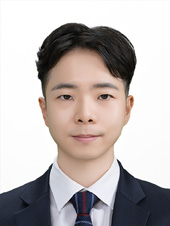

Kim Woo-cheol, President of the Korean Association of Public Finance (Professor of Taxation at the University of Seoul), praised the government’s swift policy implementation in an interview with this newspaper but criticized it, stating, “It is showing clear limitations in its fiscal management capabilities.” He argued that the challenge for the next 500 days lies not in spending more money, but in preserving the fruits of the boom as future fiscal capacity.
Chairman Kim acknowledged that the government has leveraged its majority in the National Assembly to push through bold, stock-market-centered institutional reforms and inject vitality into economic actors. However, he pointed out that “what matters is the substance,” noting that fiscal spending is being rushed through without sufficient social consensus or prior review.
The key point is that the sustainability of tax revenue and spending differs. While the profits of semiconductor companies fluctuate with market conditions, recurring welfare programs—which have established beneficiary groups and public expectations—are difficult to scale back. Programs of a universal support nature, such as the basic income for rural and fishing communities, child allowances, and youth savings accounts, are bound to face demands to expand their coverage and increase benefits once introduced.
Chairman Kim pointed out, “The government’s fiscal management plan through 2030 relies on the continued semiconductor boom,” adding, “It is uncertain whether corporate profits and tax revenues at current levels will be maintained even in the second half of next year.”
He called for social consensus, sufficient preliminary research, and objective evaluations of pilot programs, emphasizing that “the most important thing is securing stable funding.” He argued that if a program is necessary, the government must also shoulder the responsibility of adjusting other expenditures or securing additional funds.
In particular, he raised the same question regarding the Future Response Fund, a flagship initiative of the Lee Jae-myung administration. He questioned whether it is reasonable to increase borrowing in the overall budget while claiming to be saving money for the future. Professor Kim described this as “all show and no substance,” stating, “It is very disappointing that they are increasing debt by 106 trillion won to secure 104 trillion won in surplus funds—essentially creating a Future Response Fund built on debt.”
He went on to explain that the Future Response Fund should operate by generating surpluses over several years, accumulating them, and using the investment returns to support future projects. “Like the Nordic countries and Chile, we should build the fund by accumulating surpluses and establish operational principles to prevent arbitrary withdrawals of funds,” he said.


