[Edaily Reporter KIM JI-WAN ] Neogen Logic is embarking on the development of a personalized cancer vaccine to suppress recurrence after liver cancer surgery.
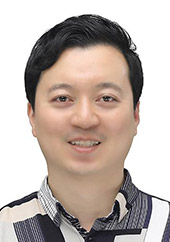
Choi Jeong-kyun, CEO of Neogen Logic and a professor at the Korea Advanced Institute of Science and Technology (KAIST), explains the company’s personalized cancer vaccine pipeline during a research and development (R&D) briefing held on the 29th of last month at the KYOBOSECURITIESCO.,LTD. headquarters on Uisadang-daero in Yeongdeungpo-gu, Seoul. (Photo: ReporterKIM JI-WAN )
Neogen Logic unveiled its development plan for “DLV-N1,” a personalized messenger ribonucleic acid (mRNA) cancer vaccine targeting hepatocellular carcinoma, at a research and development (R&D) briefing held on the 29th of last month at the KYOBOSECURITIESCO.,LTD. headquarters on Uisadang-daero in Yeongdeungpo-gu, Seoul. The company is currently preparing to establish manufacturing processes and produce investigational drugs for clinical trials. The company aims to submit an Investigational New Drug (IND) application in South Korea and Japan in the second half of next year and, following regulatory approval, administer the vaccine to the first patient in 2028.
Initially, the vaccine will be administered as a monotherapy to patients who have undergone surgery for liver cancer; subsequently, the company will explore using it in combination with existing immuno-oncology drugs for patients with advanced liver cancer. Neogen Logic is a subsidiary in which SCL Science(246960)holds a 60% stake.
After
surgically removing the tumor… Adding a vaccine to “watch-and-wait”
therapy
DLV-N1 targets the period following liver cancer surgery.
Choi Jeong-kyun, CEO of Neogen Logic and a professor at the Korea Advanced Institute of Science and Technology (KAIST), pointed out, “In the case of liver cancer, once treatment is completed through surgery, the patient is deemed to have ‘no evidence of disease.’ However, there is a gap in available adjuvant therapies that can be administered afterward, and the problem is that the recurrence rate is extremely high.”
NeoGenLogic’s plan is to administer a vaccine at this stage to induce immune cells to recognize and attack cancer cells.
The company is preparing for clinical trials based on a plan discussed with researchers at Bundang CHA Medical Center. First, in a Phase 1 clinical trial, the vaccine will be administered as a monotherapy to assess safety and confirm whether the intended immune response occurs. Subsequently, the company is considering a plan to evaluate the effectiveness of suppressing recurrence by comparing a group of patients under observation with a group that received the vaccine.
CEO Choi emphasized, “Even in the early stages, when no treatment follows surgery—especially in cases with high recurrence rates—vaccine monotherapy alone can help delay recurrence.”
Predicting T-Cell and B-Cell Responses… Selecting ‘Recognizable Targets’
Personalized cancer vaccines reflect the unique characteristics of each patient’s cancer. Mutations in cancer cell genes can create markers that distinguish them from normal cells. These are called “neoantigens.” They serve as clues for immune cells to identify cancer cells.
However, just because a marker is found in a tumor does not mean it automatically makes a good vaccine target. The patient’s immune cells must be able to recognize it and mount a sufficient response. NeogenLogic uses AI to select targets with a high likelihood of success from among numerous candidates.
This process utilizes the company’s proprietary AI platforms, “DeepNeo” and “LexiNeo.” In particular, DeepNeo is described as a platform that predicts everything from the process by which cancer targets are presented to the immune system to the responses of T cells and B cells.
CEO Choi explained, “DeepNeo is a core platform capable of comprehensively integrating and predicting everything from the binding of cancer antigens to a patient’s MHC to the induction of T-cell and B-cell responses.”
MHC molecules display antigen fragments on the cell surface so that immune cells can recognize targets. T cells either attack cancer cells directly or assist the activity of other immune cells. B cells not only produce antibodies but also take up antigens and present them to T cells.
The selected targets are encoded in mRNA. mRNA acts as a blueprint that instructs the body to produce those targets. This approach induces the immune system—which has already been exposed to the targets via the vaccine—to recognize and attack cancer cells bearing the same targets.
The precision with which targets are selected also affects the number of targets that can be included in the vaccine. The key region recognized by immune cells is called an “epitope”; if this region is identified accurately, there is less need to include lengthy surrounding sequences. This frees up space to incorporate additional targets.
Comparison of NeogenLogic’s customized cancer vaccine designs. The principle involves using AI to precisely select the key regions recognized by immune cells, thereby incorporating more targets into an mRNA of the same length. The top image shows a design based on the Moderna vaccine, while the bottom image shows a design utilizing DeepNeo and LexiNeo. (Source: NeogenLogic)
CEO Choi explained, “Because we can select and include only the epitope regions capable of precisely triggering an immune response, we can incorporate up to 61 targets when designing an mRNA of the same length.”
The company’s presentation compared the Moderna approach, which includes about 34 targets, with its own approach, which includes 61. These numbers refer to the number of targets incorporated into the vaccine, not the number of T or B cells. This means that the same amount of mRNA can carry more cancer-specific features recognizable by the immune system.
He said, “The ability to include more targets is a secondary benefit resulting from higher predictive accuracy,” adding, “You can think of it this way: even if the same number of targets is included, because they are more precise, they can elicit a better immune response.”
When
Immuno-Oncology Drugs Release the ‘Brakes’… Vaccines Identify Targets to Attack
Neogen Logic is also considering expanding the development scope of DLV-N1 from post-surgical recurrence prevention to advanced liver cancer. The plan is to combine the vaccine with existing immune checkpoint inhibitors to achieve additional therapeutic effects.
Immune checkpoint inhibitors are drugs that block signals that suppress the activity of immune cells. Their role can be likened to releasing the “brakes” on immune cells. Vaccines, in turn, serve to identify the cancer targets for attack.
CEO Choi explained, “I believe we can expect additional benefits by combining a vaccine with an immune checkpoint inhibitor,” adding, “It’s a method of guiding T cells to attack cancer antigens with greater precision.”
Neogen Logic is currently establishing a vaccine production system and a clinical collaboration network in South Korea and Japan to prepare for clinical trials.
He stated, “We have finalized the terms of agreements with an mRNA contract development and manufacturing organization (CDMO) and a company possessing LNP technology, and are on the verge of signing them,” adding, “We have signed a contract with EPS, a Japanese contract research organization (CRO), and are establishing a local clinical and manufacturing partnership.” He continued, “After establishing the manufacturing process, producing clinical-grade drugs, and completing preclinical validation, we plan to submit an investigational new drug (IND) application to the regulatory authorities in both countries.”
Meanwhile, according to market research firm Grand View Research, the global liver cancer treatment market is projected to expand from $4.3 billion (5.8302 trillion won) last year to $14.3 billion (19.4308 trillion won) by 2033. According to the International Agency for Research on Cancer (IARC)’s “Globocan 2024,” there were an estimated 843,000 new cases of liver cancer and approximately 732,000 deaths worldwide in 2024.
With SK hynix’s stock price plummeting by more than 11%, attention is turning to the unrealized gains and losses of SK Group Chairman Chey Tae-won, who purchased the company’s shares for approximately…
Shinsegae Co.,Ltd Live Shopping is stepping up its efforts to tap into demand for travel to Japan. This is because domestic tourism demand for trips to Japan—particularly for shopping—continues to gro…
Cafe24 Corp.(042000)is expanding its support for K-brands entering the Japanese market by leveraging a local influencer network in Japan. Beyond providing sales infrastructure, the company now offers …