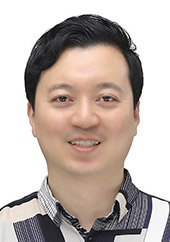
[Edaily Reporter KIM JI-WAN ] “A 2.5 billion won investment led to a global technology export deal worth up to 1.53 trillion won.”
Lee Sang-hyun, CEO of OSCOTEC Inc., began by recounting the story of “ADEL-Y01,” an Alzheimer’s treatment that the company began jointly developing with the biotech venture Adel in 2020. At the time, OSCOTEC Inc.(039200)paid an upfront fee of 2.5 billion won. This represented a significant investment in an early-stage drug candidate with no guarantee of success.
Five years later, the results were astonishing. Global pharmaceutical company Sanofi recognized the value of ADEL-Y01 and secured exclusive worldwide development and commercialization rights. The total contract value reached up to $1.04 billion (approximately 1.53 trillion won). The non-refundable upfront payment alone amounted to $80 million (approximately 118 billion won). OSCOTEC Inc.’s contractual revenue share is 47 percent. This means the company secured a share of approximately 55.5 billion won from the upfront payment alone. The significance of this deal lies not merely in the size of the contract, but in the fact that two domestic biotech ventures combined their respective expertise to win the favor of a global big pharma company.
(Graphic: ChatGPT)
OSCOTEC Inc. celebrated the 20th anniversary of its IPO this year. This holds special significance within the domestic biotech industry. It stands in stark contrast to many first-generation biotech companies that listed on KOSDAQ in the mid-2000s, which failed to deliver new drug development results for extended periods and kept investors waiting while relying on capital raising through rights offerings and the issuance of convertible bonds (CBs).
OSCOTEC Inc. has proven the potential of new drug development through tangible results, including the global technology export of its domestically developed anticancer drug “Lecraza” (lasertinib), its approval by the U.S. Food and Drug Administration (FDA), and its commercialization. Furthermore, the technology export of the Alzheimer’s treatment “ADEL-Y01” to Sanofi demonstrates that sustained research and development can lead to further achievements.
For Lee Sang-hyun, CEO of OSCOTEC Inc., the 20 years since the company’s IPO are not merely a history of survival. It is a period in which the management strategy—which ensured the company’s survival while never ceasing research and development—has borne fruit. On the 26th, E-Daily conducted a written interview with CEO Lee to mark the 20th anniversary of OSCOTEC Inc.’s listing. We looked back on the past 20 years of this first-generation Korean biotech company, explored the meaning of being a biotech entrepreneur in South Korea, and discussed future challenges.
“From a 2.5 billion investment to 1.5 trillion in technology exports… What’s difficult alone becomes possible when we work together”
Q. You recently expressed particular affection for Adel, which is preparing for an IPO. What is your connection to the company?
- Adel is a partner company that jointly developed an Alzheimer’s treatment with OSCOTEC Inc. When we signed a joint R&D agreement in 2020, OSCOTEC Inc. invested 2.5 billion won. For a new drug development company, 2.5 billion won is by no means a small sum. However, we decided to partner up because we saw the potential in the R&D. We also clearly divided our roles. Adel was responsible for CMC (Chemistry, Manufacturing, and Controls) related to drug production and business development, while OSCOTEC Inc. handled preclinical and clinical development, including pharmacokinetics (PK) and toxicity testing. Each company focused on the areas where it excels. ADEL-Y01, which we have been jointly developing in this manner, was licensed to the global pharmaceutical company Sanofi. This is also why I sincerely support Adel’s IPO.
Q. The technology export deal with Sanofi is valued at up to 1.53 trillion won. What significance do you attribute to this?
- I believe it is significant that domestic biotech companies collaborated to achieve success in the global market. New drug development requires enormous funds and a long time. It is difficult for any single company to handle the entire R&D process on its own. OSCOTEC Inc. and ADEL divided their roles based on their respective expertise and continued their joint R&D efforts. It is significant that this collaboration led to a global technology export.
Q. What kind of therapeutic is ADEL-Y01? What is its current status?
-ADEL-Y01 is an antibody therapy that targets the tau protein, a major pathological factor in Alzheimer’s disease. Unlike previously approved Alzheimer’s antibody therapies, which primarily focus on removing amyloid beta, ADEL-Y01 is designed to inhibit the aggregation of pathological tau protein and its spread between neurons. In particular, it is characterized by selectively recognizing pathological tau (acK280)—where lysine 280 is acetylated—while preserving normal tau protein as much as possible. Through an agreement last December, Sanofi assumed responsibility for the subsequent clinical development, approval, production, and commercialization of ADEL-Y01. A Phase 1b clinical trial targeting patients with early-stage Alzheimer’s disease has been completed.
“Going public wasn’t the end… The reason we couldn’t stop R&D for 20 years”
Q. OSCOTEC Inc. went public on KOSDAQ in 2007. What kind of company was it at the time?
-At the time, OSCOTEC Inc. garnered attention as a “Korean-style biotech venture” that simultaneously pursued both profitable operations and new drug development. While developing treatments for osteoporosis and arthritis, the company was generating revenue through its functional food ingredients and dental medical device businesses. Back then, market expectations for the biotech industry were not as high as they are today. Nevertheless, the founder, research team, employees, and shareholders believed in the company’s future and stood together.
Q. A considerable amount of time passed even after the IPO. What was the biggest challenge?
- Even after the IPO, we had to continue investing in research and development. To grow into a global biotech company, there were many areas requiring investment, such as establishing a U.S. subsidiary. The problem was that we had no way of knowing when we would see results. New drug development is a long-term endeavor. Simply pouring funds into R&D does not guarantee immediate results. But we couldn’t stop R&D. After all, for the company to grow, we ultimately had to secure new technologies and new drugs. To endure that long period, we cut unnecessary expenses, conserved our limited resources, and focused on R&D.
Q. Does that mean you were constantly forced to choose between investing in R&D and ensuring the company’s survival?
-Yes. While managing a biotech company, striking a balance between the present and the future has always been a difficult challenge. We must allocate resources to the R&D that is needed right now. But at the same time, we must also set aside reserves to prepare for a wait that might be longer than expected. I, too, have managed OSCOTEC Inc.’s finances to support R&D. It was crucial to invest where necessary while preserving the foundation needed to sustain R&D. The resources we saved and accumulated in this way became the backbone that allowed us to continue our research despite countless difficulties and keep the company going to this day.
“Professors
Waived
Stock Options… The DNA That Sustained the Company”
Q. There is an anecdote about professors at OSCOTEC Inc. voluntarily waiving their stock options immediately after
the company
went public.
-OSCOTEC Inc. was founded after the Asian financial crisis by the late founder Kim Jeong-geun and his fellow professors, who joined forces. Immediately after the IPO, the professors who had contributed to the company’s R&D voluntarily waived their stock options to stabilize the stock price. They gave up exercising their rights for the sake of the company’s future. It’s something I still remember to this day. OSCOTEC Inc. is a company that was founded and has grown through the dedication of its founder, research team, employees, and shareholders.
Q. It’s also interesting to hear that you held your first annual general meeting of shareholders on an outdoor sports field.
-We held the first annual general meeting of shareholders at the outdoor sports field of our headquarters, which was located in Cheonan, South Chungcheong Province, at the time. It was a scene quite different from the typical shareholder meetings of publicly traded companies. In fact, this scene also illustrates what kind of company OSCOTEC Inc. was. It was founded by people united by a commitment to research and development, and joined by shareholders who believed in its potential. Even after going public, it took a long time to live up to the high expectations with tangible results. The dedication of the employees and shareholders to the company was what enabled us to endure that period.
“The next 20 years will be different”
Q. Now that you’ve reached your 20th year as a publicly traded company, how do you assess the past two decades?
- Looking back, it was a process of enduring a long period while maintaining faith in an uncertain future. In new drug development, there is no set timeline for success. Throughout that process, we had to consider both the company’s present and its future simultaneously. Even while playing a supporting role in R&D, we always had to make difficult choices. However, one thing was clear: we had to preserve the foundation that would allow us to continue our R&D efforts. I believe that OSCOTEC Inc. has been able to endure this long precisely because we have strived to uphold that principle.
Q. What do you think needs to change over the next 20 years?
- Based on our experience over the past 20 years, we must maintain the continuity of R&D while also focusing on the company’s growth. It is also a crucial responsibility to live up to the expectations and trust of our shareholders, who have believed in and waited for OSCOTEC Inc. A new drug development company cannot stop investing in the future. At the same time, we must build a foundation for the company’s sustained growth. Going forward, I intend to fulfill my responsibilities while maintaining a balance between these two priorities.
Q. Finally, if you had to define “what it means to be a biotech entrepreneur in South Korea” in one sentence, what would it be?
- I believe it means persevering over the long term while maintaining faith in an uncertain future. To develop new drugs, we must invest resources now, but we must also have the capacity to wait until results materialize. Throughout this process, we must ensure the continuity of R&D while simultaneously balancing the company’s growth with shareholders’ expectations. If the past 20 years were about finding that balance, I intend to make the next 20 years a time when, building on that experience, we achieve OSCOTEC Inc.’s sustained growth and live up to our shareholders’ trust.
It has been confirmed that “VCB-1201,” a multiple myeloma cell therapy currently under development by Vaxcell-Bio Therapeutics(323990), achieved a 100% survival rate over 120 days in preclinical anima…
Experts have analyzed that for companies to restore customer trust eroded by security incidents, they must go beyond one-time apologies or compensation campaigns and proactively shoulder the risks and…