KOSPI Plummets as Fear Overwhelms Earnings… “Rebound Expected in the Low to Mid-7,000 Range” (Roundup)
Roundtable Discussion with Kim Byung-yeon, Executive Director of Investment Strategy at NH INVESTMENT & SECURITIES
KOSPI Support Level Estimated at 5,800–6,250 Based on Worst-Case Scenario
“A Slowdown in Growth and a Decline in Profits Are Two Different Things”… Emphasizing the Resilience of the Semiconductor Industry
Big Tech Earnings Key to Rebound… Selling Pressure Expected from the Mid-8,000 Level
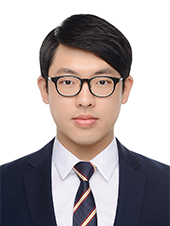
[Edaily Reporter Park Sun-Yeop ] Analysts have concluded that the domestic stock market has been excessively depressed relative to corporate earnings fundamentals due to a confluence of negative factors, including the semiconductor industry’s peak-out, tensions between the U.S. and Iran, and the rise of Chinese artificial intelligence (AI) models. The outlook suggests that the KOSPI level around 6,000 represents the bottom-case scenario, with the index expected to rebound to the low to mid-7,000 range thereafter. However, it is anticipated that upward momentum will slow starting from the mid-8,000s due to selling pressure at higher levels, and sector-specific divergence will become more pronounced. Kim Byung-yeon, Executive Director of Investment Strategy at NH INVESTMENT & SECURITIES, stated at the “Press Corps–Securities Firm Analysts Roundtable” held on the 20th at the Korea Exchange in Yeouido, Seoul, “With various adverse factors overlapping in a short period, the market has been excessively corrected relative to the absolute level of corporate earnings.” Kim Byung-yeon, Head of Investment Strategy at NH INVESTMENT & SECURITIES, explains the stock market outlook for the second half of the year during the “KRX Press Corps–Securities Firm Analysts Roundtable” held at the Korea Exchange in Yeouido, Seoul, on the 20th. (Photo: ReporterPark Sun-Yeop ) ◇ KOSPI 6,000 mark serves as support… Rebound expected to the low to mid-7,000 range Mr. Kim highlighted that domestic semiconductor companies, including SK hynix(000660), are unlikely to return to a loss-making phase as in the past, and that their earnings resilience has strengthened due to expanding server demand. Accordingly, taking into account both past cycle troughs and valuations during the recent uptrend, he proposed a 12-month forward price-to-book ratio (PBR) of 1.3 to 1.4 times as the market’s minimum valuation. Applying this to the KOSPI, this translates to a range of approximately 5,800 to 6,250. “This does not mean the KOSPI will fall another 10% from its current level,” he explained. “It means that even if all negative factors are factored in at crisis levels, the 6,000 level is likely to provide support.” Given that the current index level has already largely factored in various negative factors, the assessment is that attention should be focused on the recovery path following a correction rather than the possibility of further declines. Director Kim said, “Even if a further sharp price correction occurs, it is unlikely that the KOSPI will remain at the 6,000 level for long, and it is highly likely to rebound to the low to mid-7,000 range,” adding, “Once the sustainability of AI demand is confirmed through Big Tech earnings, the market will gradually stabilize.” However, he predicted that the index would take some time to absorb selling pressure rather than immediately returning to its previous high. As the KOSPI approaches the mid-8,000 level, profit-taking pressure is expected to increase due to pending selling near the peak; subsequently, stock-specific differentiation is anticipated depending on the sustainability of Big Tech earnings and semiconductor profits. (Chart: NH INVESTMENT & SECURITIES) ◇“Growth Slowdown Is Different from a Peak-Out”… Focus on the Resilience of Semiconductor Profits Regarding concerns over a semiconductor “peak-out,” the report emphasized the need to distinguish between a slowdown in export and profit growth rates and a contraction in the industry’s absolute scale. While the growth rate of semiconductor exports may decline due to a high base, the average daily export value has risen from the previous range of $700 million to $800 million (approximately 1 trillion to 1.16 trillion won) to over $2 billion recently. They added that KOSPI companies’ profits should also be viewed in this context. NH INVESTMENT & SECURITIES estimates that KOSPI companies’ net income will rise from 217 trillion won in 2025 to 759 trillion won this year and 1,019 trillion won next year. The firm believes that even if profit growth rates slow thereafter, as long as net income remains around 1,000 trillion won, it would be difficult to conclude that this represents a typical semiconductor downturn cycle like those seen in the past. Director Kim said, “While the momentum of the growth rate may slow, the level of profits itself has changed significantly,” adding, “We need to see whether the semiconductor sector will return to losses as in the past or maintain its elevated profit levels.” He also acknowledged the possibility of downward revisions to SK hynix’s short-term earnings estimates due to long-term supply agreements (LTAs). However, he noted that since long-term contracts increase visibility on prices and volumes—thereby reducing profit volatility and enhancing medium- to long-term earnings stability—it is premature to interpret this directly as a sign that the semiconductor market has peaked. ◇Big Tech Cloud Revenue Is Key… AI Investment Expected to Continue Cloud revenue from Big Tech companies was identified as the key variable that will determine the sustainability of a future stock market rebound. The analysis suggests that, given the nature of AI investment as a competition for market share, it is unlikely that hyperscalers will sharply reduce capital expenditures solely due to short-term cash flow pressures. NH INVESTMENT & SECURITIES projected that this year’s CAPEX for the five major hyperscalers will reach $758 billion, an 82.3% increase from the previous year. “The AI market is a battle for market share where the ultimate winner takes all,” said Director Kim. “Since reducing investment could lead to being eliminated from the competition, it is difficult to change the investment strategy based solely on short-term cash flow pressures.” He added, “Rather than focusing on the CAPEX growth rate itself, we need to verify whether cloud revenue and actual AI demand continue to increase.” The firm also noted that recent improvements in the token efficiency of AI models are unlikely to directly lead to a decrease in memory demand. The explanation is that as some computations—which had been concentrated in High-Bandwidth Memory (HBM)—are distributed to Central Processing Units (CPUs) and external devices, the use of general-purpose memory will increase. Furthermore, as the volume of communication between external data and AI models rises, the importance of data center and network infrastructure is likely to grow. (Chart: NH INVESTMENT & SECURITIES) ◇Interest Rates to Remain Unchanged Through Year-End…Sector-by-Sector Polarization Amid High Interest Rates Director Kim predicted that the U.S. Federal Reserve (Fed) is highly likely to keep the benchmark interest rate unchanged until the end of the year, citing the continued slump in the housing market, the stabilization of expected inflation, and the narrow gap between wage growth and inflation. He placed greater weight on the possibility of rates remaining flat at current levels rather than rising further. He predicted that if interest rates remain at these high levels, polarization across sectors will intensify. “The market will split into industries that can withstand current interest rates and those that cannot,” Director Kim said. “While the financial and IT sectors will remain relatively robust, domestic demand-driven sectors such as construction, food and beverages, and retail may continue to face difficulties.” However, the firm assessed that supply-and-demand pressures across the overall market have passed their peak. In terms of retail investor activity, customer deposits remain in the 100 trillion won range, and the balance of margin loans relative to market capitalization stands at only about 0.5%, suggesting that the risk of large-scale forced liquidations is limited. The firm also projected that additional selling pressure would gradually ease, as foreign investors’ holdings of domestic semiconductor stocks have fallen to historic lows. The KOSDAQ market was identified as likely to begin normalizing around September, when policy schedules become more concrete. Amid market restructuring driven by stricter delisting criteria, the launch of the second round of the Public Growth Fund—which involves public participation—and the finalization of the KOSDAQ promotion-demotion system are expected to converge, potentially creating policy momentum for the KOSDAQ market. Finally, he assessed that the recent market situation resembles that of March and April, when concerns over a semiconductor peak-out, geopolitical risks, and a slowdown in AI investment all surfaced simultaneously. Director Kim emphasized, “Back then, the market was shaken sharply as negative factors converged, but it rebounded once the uncertainty subsided,” adding, “We need to recall the lessons learned from March and April.” (Chart: NH INVESTMENT & SECURITIES)
SamsungElectronics’ executive team received a large block of company stock as part of their Long-Term Incentive (LTI) plan. Roh Tae-moon, CEO of SamsungElectronics and Head of the Device Experience (D…
Mr. Kim, a 30-something office worker based in Yeongdeungpo-gu, Seoul, stops by a CU Running Station on his way to go for a run at Yeouido Hangang Park after work. He leaves his bag in the store’s loc…
“I am a blockchain fanatic.”Jang Hyun-guk, CEO of NEXUS, described himself this way during an E-Daily interview held at the company’s headquarters in Pangyo, Gyeonggi Province, on the 30th of last mon…