Private School Teachers’ Pension Fund Welcomes New Chairman… What’s Next After Record-Breaking Investment Performance?
[Market In]
Kim Chang-soo Inaugurated as 21st Chairman…Term Runs Through 2029
Last Year’s Return of 18.9% and Investment Income of 4.8 Trillion Won Mark “All-Time Highs”
2025 Fiscal Recalculation Report Projects Fund Depletion by 2047
Beyond Strong Investment Performance, Fiscal Stabilization and Institutional Reform Are Key Challenges
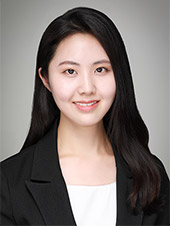
[Edaily Marketin YunJi Kim JI YEONG-EUI Reporter] Kim Chang-soo, former president of Chung-Ang University, has taken office as the 21st chairman of the Private School Teachers’ Pension Fund (PSTPF) and has officially begun his duties. Having inherited record-breaking fund management performance, Chairman Kim’s primary challenge is expected to be ensuring that these results are not merely a one-time achievement but rather lead to the long-term financial stability of the PSTPF. The capital markets are watching closely to see whether he can continue generating stable returns while transforming “well-managed funds” into “sustainable pensions.” Kim Chang-soo, former President of Chung-Ang University, has been appointed as the 21st Chairman of the Private School Teachers’ Pension Fund. (Photo: Private School Teachers’ Pension Fund)
Kim Chang-soo, New Head of the Private School Teachers’ Pension Fund… Taking the Baton from Unprecedented Investment Performance
According to the Private School Pension Fund on the 29th, Chairman Kim took office as the 21st Chairman the previous day. His three-year term runs until September 27, 2029.
Chairman Kim graduated from the Department of Business Administration at Chung-Ang University and earned a Ph.D. in Business Administration from Florida International University (FIU) in the United States. He subsequently served as a professor and president of the College of Business Administration at Chung-Ang University, as well as chair of the Special Committee on University Admissions System Reform under the National Education Commission, a member of the Presidential Advisory Council on Education, Science, and Technology, and a member of the University Structural Reform Committee under the Ministry of Education, Science and Technology.
In addition to his background in educational administration, he also has ties to the financial sector. Chairman Kim previously served as a member of the Private School Pension Fund’s Asset Management Committee and as an outside director at financial institutions, gaining experience in fund management, finance, and accounting.
At his inauguration ceremony, Chairman Kim identified the “sustainability” of the Private School Pension Fund as a key priority. His vision is to enhance the fund’s sustainability through stable pension fund management and member-centered welfare services, and to develop the Private School Pension Fund into a “specialized institution for pensions, welfare, and fund management that grows alongside faculty and staff.”
The fund’s performance record that Chairman Kim has inherited is better than ever. Last year, the Private School Pension Fund posted a return on investment of 18.9% and operating income of 4.8118 trillion won, marking its best performance since its founding. The size of its financial assets also reached a record high of 29.728 trillion won. Cumulative operating income over the past three years has reached 10 trillion won.
Strong investment performance has continued into this year as well. The Private School Teachers’ Pension Fund currently manages approximately 33 trillion won in assets, including bonds, stocks, and alternative investments. With high investment returns continuing over the past few years and the fund’s size growing rapidly, observers note that conditions for pursuing fiscal stabilization have improved compared to the past.
Time Gained Through Investment Performance… Discussions on Fiscal Stabilization Gain Momentum
Despite strong
investment performance
, the structural burden on the pension system’s finances is actually increasing. The 6th Financial Recalculation, conducted in 2025, projected that the Private School Teachers’ Pension Fund would be depleted by 2047. This projected depletion date was moved up by two years compared to the previous fiscal re-calculation, largely due to the increasing number of pension recipients and the resulting rise in benefit expenditures. In fact, over the past five years, pension benefit expenditures have increased by an average of 11.0% annually, while the number of beneficiaries has risen by 7.9% per year. Consequently, the fiscal surplus has shrunk from 2.135 trillion won in 2021 to 449.3 billion won in 2024.
For now, high investment returns are partially offsetting this fiscal burden. This is why some projections suggest that if the investment return rate remains around 20% through the end of this year, the fund’s depletion could be delayed until after 2051. In essence, strong investment performance is buying time needed to stabilize the system’s finances.
The problem is that there are clear limitations to relying solely on this approach to sustain the system’s long-term finances. Market observers point out that it is difficult to design the system’s finances based on the assumption of double-digit annual returns, and that the structural imbalance between revenue and expenditures—caused by a shrinking subscriber base and a growing number of beneficiaries—cannot be resolved by investment performance alone. This means that, in the medium to long term, institutional-level measures must be implemented in parallel.
Recognizing these challenges, the Private School Teachers’ Pension Fund is conducting policy research with the Korean Association of Public Finance to develop fiscal stabilization measures. The aim is to examine premium revenue, pension benefits, and the structure of contributors and beneficiaries together to identify medium- to long-term fiscal stabilization measures. In particular, since the potential for a weakening contributor base due to a declining school-age population, university restructuring, and school closures must be considered, the core of the research is expected to focus on measures that address the overall pension finances, going beyond mere investment performance.
The capital markets anticipate that under Chairman Kim’s leadership, the fund will continue to deliver strong investment performance while simultaneously accelerating efforts to stabilize its finances. The key challenge, analysts say, will be how effectively the fund uses the time gained through its investment performance to develop concrete institutional reforms that address the declining number of contributors and the rising number of beneficiaries.
Kim Chang-soo, former president of Chung-Ang University, has taken office as the 21st chairman of the Private School Teachers’ Pension Fund (PSTPF) and has officially begun his duties. Having inherite…
With the deadline for stricter environmental regulations in the European automotive market just two months away, domestic cybersecurity companies are stepping up their efforts. This is because, starti…
Dr. Pooja Dua of Olix Pharmaceuticals, Inc.’s U.S. subsidiary, Olix US (Photo courtesy of the Drug Information Association (DIA))
Olix Pharmaceuticals, Inc.(226950)announced the development progre…