[Edaily Reporter Kim Seung-kwon ] “Communication technology is, at its core, signal processing technology. It is used in exactly the same way to process biological signals.”
Lee Byung-hwan, CEO of SkyLabs, explained the origins of the company’s founding in this way. #SkyLabs is a company that develops ring-type, cuffless blood pressure monitors and was listed on KOSDAQ on September 4. It measures blood pressure 24 hours a day simply by wearing a ring, without the need for a cuff wrapped around the arm. Based on an interview with CEO Lee, Palm E-Daily will examine SkyLabs’ founding background, technology, and post-listing strategies in a three-part series.
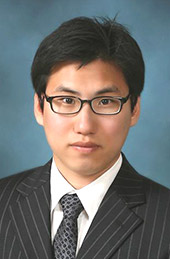
SkyLabs CEO Lee Byung-hwan being interviewed by Palm Daily (Photo courtesy of SkyLabs)
A
Telecommunications Engineer Finds Answers in Biosignals
CEO Lee graduated from Inha University’s School of Electrical, Electronic, and Computer Engineering. He earned a master’s degree in Electrical and Electronic Engineering from KAIST. He subsequently conducted research on 5G mobile communication technology at Samsung Electronics’ DMC Research Institute. He has over 16 years of experience in developing signal processing technology.
What caught his attention was the “versatility” of the technology. Digital signal processing is the foundational technology for mobile and wireless communications. The same principles apply to the analysis of biosignals, such as pulse waves.
CEO Lee stated, “The fundamental technology behind signal processing is the same across the board,” adding, “We were able to apply that technology to challenges the medical field had yet to solve.” He continued, “The most important thing was to refine the signal processing technology we had been developing for so long into products that met the medical industry’s needs.”
Thus, SkyLabs opened its doors in September 2015. The first target was arrhythmia, specifically atrial fibrillation. The reason was clear: it is the condition with the highest demand for continuous monitoring. CEO Lee explained, “Arrhythmia is a condition that requires continuous, long-term monitoring of the heart’s rhythm without interruption,” adding, “That’s why we use patches attached to the chest for monitoring.”
There was also a specific reason for choosing a ring as the form factor. When measuring a pulse with a light sensor, accuracy increases the closer the sensor is to the fingertip. This makes a ring more advantageous than a wristwatch.
Early success came first from overseas. In 2017, SkyLabs was selected as one of the final four teams in Bayer’s digital health accelerator, “Grants for Apps.” The program had attracted applications from over 450 teams across 61 countries. SkyLabs received a grant of 50,000 euros and moved into Bayer’s headquarters in Berlin, Germany, where it received mentoring. Starting in 2018, the company conducted joint clinical research with Charité Hospital in Germany. It won first place in the Digital Health category at the European Society of Cardiology for two consecutive years. In 2019, the venture capital firm that invested in SkyLabs cited the potential for SkyLabs’ optical sensor signal processing technology to expand into the analysis of other vital signs, such as blood pressure, as the reason for its investment. The expansion into blood pressure monitoring was, in a sense, foreshadowed at that time.
The ring-shaped atrial fibrillation detector “CART” was refined in this way. The company stated that “CART One,” unveiled in 2020, showed a 99% concordance rate with doctors’ atrial fibrillation diagnoses. At the time, CEO Lee identified the management of “chronic diseases outside the hospital”—rather than within the doctor’s office—as the company’s primary focus. The vision was to continuously monitor conditions that are difficult to diagnose during brief clinic visits as part of daily life.
Lessons
from the Arrhythmia Ring… A Shift to “Hospitals First
”
The problem was market access. Sales of CART One Plus began in early 2021. Starting in February 2022, it was also sold to general consumers through Chong Kun Dang’s online channels. However, the market response fell short of expectations. The product was eventually discontinued.
CEO Lee attributed the failure to the “order” of market entry. He explained that the standard approach for medical devices is to be used in hospitals first before moving into the home. Even the home blood pressure monitors we use today originated in hospitals.
CEO Lee stated, “If you sell a new product for home use first, you have to spend an enormous amount of effort and money on marketing, but the ripple effect isn’t significant.” He added, “It’s really difficult to sell an innovative product that didn’t exist before through the B2C channel first,” noting, “You could spend tens of billions or even hundreds of billions of won on marketing, but that’s not sustainable.”
The examples he cited were blood pressure monitors, blood glucose meters, and thermometers. These are virtually the only B2C medical devices that consumers can name off the top of their heads. Braun is the leading brand for thermometers, and Omron is the leader in blood pressure monitors. In South Korea, iSense products are widely used for blood glucose meters, while Abbott and Dexcom lead the market for continuous glucose monitors. CEO Lee explained, “Even those companies don’t actively engage in B2C marketing,” adding, “They let users who were already using the devices in hospitals naturally transition to their products.” The existence of ECG—an established standard technology—was also a stumbling block. In essence, there was little room for the arrhythmia ring to gain a foothold in hospitals.
Consequently, SkyLabs changed course. The company sought out the medical device most widely used in hospitals. The answer was the blood pressure monitor. CEO Lee stated, “Every hospital measures blood pressure,” adding, “We focused on developing a cuffless blood pressure monitor that was equivalent to existing products.” The company had possessed blood pressure measurement technology since its early days. It simply changed the order of priorities and made it its core business. While winding down the arrhythmia business, the company poured its efforts into developing the cuffless blood pressure monitor. Development and clinical trials for oxygen saturation measurement technology were also completed during this period.
The arrhythmia technology hasn’t disappeared. The rhythm measurement function, which detects irregular heartbeats, is currently integrated into the company’s blood pressure monitor products. The market potential was also significant. CEO Lee emphasized, “The blood pressure monitor market is extremely widespread,” adding, “One in three people will suffer from high blood pressure at some point in their lives.” The company’s strategy was to enter the medical device market—which includes blood pressure monitors, blood glucose meters, and thermometers—a sector familiar to everyone.
This effort culminated in approval from the Ministry of Food and Drug Safety in March 2023. In June of the same year, the company signed a domestic distribution agreement with Daewoong Pharmaceutical. In June 2024, the device became eligible for coverage under the National Health Insurance program—a first for a ring-type blood pressure monitor.
Investors weathered the lengthy approval process alongside the company. SkyLabs raised 8 billion won in Series A funding in 2019, 22.5 billion won in Series B in 2021, and 20.7 billion won in Series C in 2023. Omron Ventures, the investment arm of Omron—the world’s leading blood pressure monitor manufacturer—also joined as a strategic investor. In last year’s pre-IPO bridge funding round, the company was valued at around 200 billion won. Sources in the investment industry note that there was a period when the company’s survival was uncertain because it could not generate revenue until regulatory approval was granted.
In a sense, the lessons learned from the arrhythmia ring have shaped the SkyLabs of today. Last September, 11 years after its founding, the company achieved its first major milestone: a listing on KOSDAQ.
SamsungElectronics held home appliance tech seminars in five global regions and showcased AI home appliance experiences tailored to the living environments and consumer characteristics of each region.…
AEKYUNG INDUSTRIAL(018250), which was acquired by T. K. CORPORATION earlier this year, is accelerating the expansion of its beauty (cosmetics) business. The company aims to increase the share of its c…
KTCorporation(030200)has partnered with Acryl Inc., a company specializing in medical AI, to collaborate on everything from the utilization of medical data to the development and commercialization of …