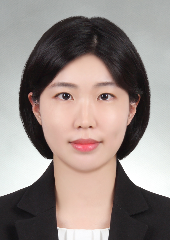

Park Hyun-sook, CEO of CellBio, made this statement at “BIO JAPAN 2026,” which was recently held in Yokohama, Japan. CellBio is pursuing entry into the Japanese market with its allogeneic bone marrow progenitor cell therapy “CF-M801.” While conducting a Phase 2 clinical trial in Korea, the company is also seeking a partner in Japan to handle local clinical trials, regulatory approval, and distribution. Following ongoing regulatory consulting with the Japanese contract research organization (CRO) CMIC, the company has completed the preliminary consultation process for orphan drug designation with the Ministry of Health, Labor and Welfare (MHLW) and has begun formal consultations with the Pharmaceuticals and Medical Devices Agency (PMDA) as well as preparations for the clinical trial protocol.
CellBio has signed confidentiality agreements (CDAs) with major Japanese orthopedic companies and is continuing discussions with them. CEO Park stated, “The primary goal of this business trip is to find a commercialization partner who will jointly lead clinical trials and product approval in Japan.”
CF-M801 is a cell therapy targeting avascular necrosis of the femoral head. Avascular necrosis of the femoral head is a condition in which bone tissue in the hip joint undergoes necrosis due to inadequate blood supply; if left untreated, the joint may collapse, potentially requiring hip replacement surgery. CellBio has applied its “QuickDiff” 3D rapid differentiation platform—which differentiates healthy umbilical cord-derived mesenchymal stem cells (MSCs) into osteoblast precursors specialized in bone formation within 3 to 5 days—to CF-M801.
CEO Park explained, “The interior of a patient’s joint is a very harsh microenvironment filled with inflammation, hypoxia, and ischemia,” adding, “CF-M801 is the world’s only therapeutic agent that exhibits a ‘dual mechanism of action (Dual MoA)’—opening new blood vessels to restore blood flow (angiogenesis) and firmly filling the site with bone (osteogenesis).”
He added, “Long-term follow-up of the nine patients who participated in the Phase 1 clinical trial revealed no drug-related adverse reactions or formation of polyclonal antibodies (PRA), and all nine patients showed marked improvement in pain, joint function, and the angle of necrosis.”
Increased Scale and Efficiency Through a Clinical Trial Design Focused on High-Risk Patients in JapanRather than directly applying the domestic clinical trial design to
the Japanese trial, CellBio is exploring ways to increase the scale and efficiency of the trial by focusing on high-risk patient groups with a high likelihood of femoral head collapse. The company plans to finalize the patient group and clinical trial design through discussions with researchers at Tsukuba University and local joint preservation specialists.
The company is also considering a plan to divide roles with local partners during its expansion into the Japanese market. CEO Park stated, “We will comprehensively produce and supply clinical and commercial frozen finished products through our master and working cell banks, manufacturing and quality control (CMC) technologies, and our domestic Good Manufacturing Practice (GMP) center.” He added, “Meanwhile, our Japanese partner will be responsible for conducting PMDA clinical trials, obtaining drug and conditional marketing authorizations, and establishing a distribution network based on its local clinical network.”
The company also plans to validate the process of transporting frozen cell-based therapeutics produced at its Korean GMP center to Japan via an ultra-low-temperature cold chain, followed by thawing and administration at local hospitals.
The hub for the Japanese business is Shonan i-Park, a biotech cluster in Kanagawa Prefecture. CellBio opened a local office and research institute there in 2024. CEO Park said, “The Shonan hub serves three key roles.” He explained, “First, it serves as a channel for ongoing face-to-face consultations with the PMDA, CMIC, and the faculty of the Department of Orthopedic Surgery at Tsukuba National University.”
He continued, “Second, it serves as a physical hub for confidential business discussions and technology validation with Japanese partner companies, and third, it functions as a validation test bed.” He added, “At the Shonan Research Institute, we can conduct logistics and quality verification to determine whether frozen cell therapies manufactured at the Korean GMP center can be shipped to Japan via an ultra-low-temperature cold chain and safely thawed and administered in a local hospital setting.”
Concurrent
Phase 2 Trials in Korea and CMC Preparation… Pushing for Expanded Indications In Korea, Phase 2clinical
trialsfor CF-M801 are currently underway. CEO Park said, “We completed the first patient dosing at Kyungpook National University Hospital this year, and starting in the second half of the year, we plan to expand the network of clinical trial sites to include Seoul National University Bundang Hospital, Catholic University Sacred Heart Hospital, and Seoul Bumun Hospital, with the goal of completing patient recruitment quickly through this network of major hospitals.”
The domestic approval strategy is also focused on the period following the Phase 2 clinical trial. CEO Park noted, “CF-M801 has already been officially designated as a ‘rare disease drug in the development stage’ by the Ministry of Food and Drug Safety,” adding, “As it is both a rare disease drug and an advanced biopharmaceutical with no alternative treatments, it qualifies for conditional marketing authorization, which allows us to apply for marketing approval based solely on the Phase 2 clinical trial results.” He added, “We will successfully complete the ongoing domestic Phase 2 clinical trial, formally apply to the MFDS for conditional marketing authorization, and commercialize it as Korea’s first cell therapy for osteonecrosis.”
The company is also taking proactive steps regarding CMC. CEO Park explained, “We are currently conducting process validation for mass production at the commercialization stage at our Gwangmyeong GMP Center,” adding, “We are collaborating with CCRM Nordic in Sweden—a leading European cell therapy hub—to conduct a global CMC gap analysis.”
CellBio is expanding the indications for CF-M801 to include fragility fractures of the hip, spinal fusion, and nonunion, while also developing “CF-M802,” a pipeline product for cartilage regeneration. The company plans to secure its own revenue through stem cell culture medium ingredients, culture media, cell lysis enzymes, and contract manufacturing (CMO) services, while growing into a musculoskeletal regenerative medicine platform company covering bone, cartilage, tendons, and ligaments.
CEO Park stated, “Even looking at CF-M801 alone, we are completing a ‘bone regeneration platform’ that started with avascular necrosis of the femoral head and has already expanded its indications to ‘hip fragility fractures’—for which we have received domestic Phase 2a IND approval—‘spinal fusion,’ which was selected as an inter-ministerial national research project, and ‘nonunion.’”
Alongside product development, the company is also establishing its own revenue base. CEO Park said, “Rather than focusing solely on clinical development, we are generating cash flow through ‘STeMiN’—a raw material for stem cell culture medium—high-performance skin boosters, cell culture media, ‘Adicol’ (a cell lysis enzyme), and our bio-CMO business.”
CEO Park said, “We are considering applying for a technology evaluation once the Phase 2 clinical trial follow-up is completed or when the results of technology transfers to Japan and the global market become tangible,” adding, “We will strategically execute a KOSDAQ initial public offering (IPO) at the point when the company’s enterprise value reaches its peak.”
He continued, “We plan to successfully complete a KOSDAQ listing under the technology exception program in conjunction with milestones such as conditional marketing approval from the Ministry of Food and Drug Safety and our first commercial launches both domestically and internationally.”


